May 9, 2025 (Steven O’Reilly) – Everyone is chiming in on the election of the first American pope, Leo XIV. Roma Locuta Est, Liliputian as it may be, cannot be expected to do less. Below I will lay out the case for why I am optimistic for the reign of Pope Leo XIV.
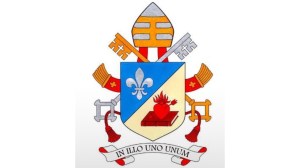
As I will argue in part, while we may not have gotten the pope we each wanted – a Cardinal Sarah, a Cardinal Erdo, a Cardinal Burke, etc.; such a hope was never a realistic one when one remembers that Francis had appointed 80% of the vote eligible Cardinals. However, I do believe, as I will argue, that we avoided the worst of the options, and got the best of the realistic options available given the composition and mind of the College of Cardinals. This, I believe, was Pope Leo XIV. How Pope Leo XIV will govern the Church, of course, only time can tell. We must wait and see. In the absence of general information of Leo XIV, speculation on how he will govern naturally rules the day at the moment, as we try to read the tea leaves.
On the Negative Side of Things…
For one, it appears he is aligned with the immigration, environmentalism and climate views of Pope Francis (see HERE). Francis was quite annoying on these topics, as his droning on about them was indistinguishable from what one might hear from the standard leftist Democrat politician in the United States, or from a European socialist. That said, most bishops seem to be somewhat to the left in their politics, so sympathy for these some of these leftist causes is perhaps not surprising in itself, and might not be cause of great concern in the case of Prevost. However, in the case of Pope Francis, his focus and rhetoric on these causes displaced talk of Christ, the Gospel, and Salvation. He was supposed to be Pope of the Catholic Church, not the head of a NGO. It remains to be seen to what degree Prevost is focused on these issues, and whether they become central to his pontificate. Let us hope not.
While devotion to these causes in themselves might not be cause for alarm, among less positive signs, it is said Cardinal Prevost was the favored choice for the papacy of those like Fr. James Martin, and writer Austen Ivereigh. Further, other suggested indicators might include the fact Cardinal Prevost is said to be close to liberal Churchmen like Cardinal Cupich of Chicago – where Cardinal Prevost is from.
Also, there is the fact that Prevost seems to have been a favorite of Pope Francis. Prevost served the former pope as Prefect of the Dicastery of Bishops. During his tenure in this position, we’ve seen a number of horrifying appointments such as Bishop McElroy to the archdiocese of Washington DC. Also, Prevost seemingly played the part of hatchet man in the dismissal of several conservative bishops. He played a part in the dismissal of Bishop Strickland from his diocese (see here). He apparently also played a role in the dismissal of Bishop Fernández Torres in Puerto Rico (see Here), and the dismissal of Bishop Rey in France (see HERE). All conservative. All gone. All, ultimately, by the will of Pope Francis.
Furthermore, we may also consult the The College of Cardinals Report, researched and written by journalists Edward Pentin and Diane Montagna. On the positive side, according to this Report, he appears to be against the ordination of female deacons. On the negative side, he seems to favor the “synodal” Church approach of Pope Francis, something he indicated on the Loggia after his election. Whether he intends the meaning of “synodal” in the same sense as Francis, remains to be seen perhaps.
On the question of Fiducia Supplicans and the blessing of same-sex couples, the College of Cardinals Report indicates Cardinal Prevost’s position is perhaps ambiguous (see HERE). This Report linked to an article (see HERE) which in turn reported in part (emphasis added):
Prevost, the American former head of the Augustinian order and former bishop of Chiclayo in Peru, specifically cited the row over Fiducia supplicans, the Dec. 18, 2023 declaration issued by the Dicastery for the Doctrine of the Faith.
Fiducia supplicans permits spontaneous blessings to couples in irregular situations, arguing that blessings are not sacraments and do not require “prior moral perfection.” But care must be taken to avoid giving the impression of a liturgical ceremony or ritual.
“The bishops in the episcopal conferences of Africa were basically saying, that here in Africa, our whole cultural reality is very different … it wasn’t rejecting the teaching authority of Rome, it was saying that our cultural situation is such that the application of this document is just not going to work,” Prevost said.
“You have to remember there are still places in Africa that apply the death penalty, for example, for people who are living in a homosexual relationship … So, we’re in very different worlds,” the Vatican official added.
Cardinal Prevost’s assertion is nonsense. In blessing a couple, one is blessing the relationship which ‘makes’ them a “couple.” This is not a culturally conditioned objection about a “cultural reality which is very different.” Rather, a couple is a couple by nature of their relationship, and apart from it, they are not a “couple.” Thus, the couple as couple is inseparable from the relationship that makes them a “couple.” The problem with Fiducia Supplicans is that in blessing a same-sex couple, the Church is, or certainly appears to give tacit approval of and a granting of legitimacy to such relationships (see Will Fiducia Supplicans Backfire on Pope Francis?). Then, on top of all this, according to Edward Pentin, Cardinal Prevost backed Pope Francis’s Amoris Laetitia which allows communion for the divorced and civilly remarried in certain cases (see HERE). All gravely disappointing.
For some of the things above, perhaps the positions previously taken by Cardinal Prevost might be understood as merely toeing the line of the “boss” in an external sense, without necessarily implying interior agreement. After all, we know Cardinal Burke’s “formal correction” of Pope Francis never materialized simply because there were few – if any – cardinals and bishops willing to even appear to stand up to Pope Francis. In such an ecosystem of bishops, could a pope like Francis pressure any bishop to go along with him, such as in axing this or that bishop, or saying ambiguous things about Fiducia Supplicans, or Amoris Laetitia, etc?
That is perhaps, the most favorable spin one can put on these things: Prevost was merely doing what a superior required of him in his position, as any other bishop might do. I am not excusing a bishop co-operating under such conditions, but it appears to be the case that most bishops go along to get along (e.g., the failure of Burke’s “formal correction”). But then again, it seems more probable that to rise to the levels he did, Prevost was chosen because Pope Francis, rightly or wrongly, saw a like mind in him.
On the Positive Side of Things…
That someone of a like-mind to Francis — at least in a general sense — was elected pope should come as absolutely no surprise. Remember, we all knew 80% of the vote-eligible cardinals were chosen by Francis. Could we really have expected, in all seriousness, that a Cardinal Sarah or Cardinal Erdo could be elected? Certainly in retrospect, it was never realistic. It was always a dream. Consider, the top three or four cardinals of the papabile were all Bergolians! And Prevost was not even among these in the betting odds. Again, to think something else was possible was always a dream.
However, that said, it could have been far worse. The heirs apparent to Pope Francis were Cardinal Tagle, Cardinal Zuppi – a favorite of the St. Egidio Community, and Cardinal Parolin. All horrific choices. Given the dozen of years they had to position themselves for a conclave, it is quite extraordinary that none of these men was elected the 267th successor to St. Peter in this recent conclave.
Therefore, we might wonder, were the cardinals as a group ‘rejecting’ Bergoglianism? While that is, perhaps, a Pollyannish stretch of the imagination, it may be the conclave results demonstrates that the College of Cardinals did want “less” of a Francis-like papacy than they thought all the leading candidates — all Bergoglians — might have given the Church.
And in the end, the hope of thwarting the worst of the Bergoglians might have been behind the rumored alliance of Anglo-phone cardinals throwing their support to Prevost’s papal candidacy in the conclave. Perhaps the “good” cardinals like Burke, Sarah, Mueller, etc., saw that the best that could be done is to stop the worst of the Bergoglians, and hope for a more moderate candidate with whom they could at least have the honest hope to reason. In support of this thesis, we do know, according to one report at least, that Cardinal Prevost had been seen visiting Cardinal Burke’s apartment in Rome (emphasis added):
“The Corriere della Sera also reported Prevost has been seen on April 30 entering conservative U.S. Cardinal Burke’s apartment in Rome to take part in “a top-secret summit.””
(Source: NCRonline commenting on a Corriere Della Sera report)
A very interesting report. So again, perhaps Burke and other conservatives understood as a practical matter, that the hope for a conservative pope at this moment in history was a dream — and that the best they could practically hope for was an as-less-of-a Francis-minded candidate as possible. I will make a few more comments on a possible agreement between Prevost and the conservative if they supported his election.
Surely, the Italian cardinals were split between the Parolin and Zuppi, and Tagle likely had his own bloc of support. So, the support for the most Bergoglian candidates was split. The quickness of the election, lasting only 4 ballots, suggests Prevost had at least 20-25 votes going in — the amount Cardinal Bergoglio had in the first scrutiny by reports when he won the election in only 5 rounds. Of course, I am only speculating, but I wonder if Parolin — though wanting desperately to be pope — saw the handwriting on the wall. That is to say, he knew through the discussions in the Congregations and from his allies that he could not win over Tagle’s and Zuppi’s supporters in the early rounds of voting, and would actually lose support the longer the conclave went on.
Consequently, I hypothesize, Cardinal Parolin decided it was the smarter play to win the new pope’s favor and gratitude by supporting him early on and in a big way, and thus retain his influential position of Secretary of State — and thereby keep alive his prospects for a future conclave. In this scenario, Parolin threw his support and his reported (and alleged) 50 vote bloc behind Prevost, at which point, having 70-75 votes, the election of Leo XIV was already nearly secured after two or three scrutinies. My hypothesis rests in great part on the fact Cardinal Parolin stood near Pope Leo XIV on his first appearance on the Loggia, pointing to Parolin’s key role. Cardinals Tagle and Zuppi were not seen nearby — all suggesting it was Parolin who played the key part in Leo XIV’s election.
There are other positive signs, I think. For one, as many have already noted, Pope Leo XIV was attired in more traditional papal garb for his first appearance on the Loggia. This was a welcome sight when one recalls Francis first appearing in only his white papal cassock. The choice of the name of “Leo” in itself might be a hopeful sign. Certainly, we know it would have been a horrifying sign if Cardinal Prevost had chosen the name “Francis II” — which would have clearly signaled his intend to identify himself with the goals and policies of Pope Francis and his pontificate. Also, I heard today that Pope Leo XIV will reside in the Apostolic Palace, which is good news for the traditionally minded after years of seeing our pope in a hotel room at Casa Santa Marta. Furthermore, it does not appear Pope Leo XIV is the troll that Pope Francis was, who seemed to take delight in antagonizing conservative Catholics.
Be Hopeful and Optimistic – and Prayerful!
Although these few positive signs may seem pretty thin, I think we probably got the best outcome from this Conclave for which we could have reasonably hoped. The reality is Pope Francis had appointed 80% of vote-eligible cardinals. The talk following the death of Francis that we might hope for better – like a Pope XII — was never really “in the cards.” It was a fleeting dream.
Again, just a hypothesis on my part, but I do believe conservative cardinals took part in a grand strategy and a deal to block the worst of the Bergoglian candidates. I don’t know, but my gut tells me there was some bargaining behind the scenes between Prevost and his allies, and the conservative cardinals, and that they came to an understanding or agreement on a post-election modus vivendi. While this might not necessarily lead to great things, it may likely lead to “better” things, i.e., improvements in some areas, and at least assurances to at least look again with a fresh eye and an open mind at some of the documents produced by or under Pope Francis.
Does this mean Amoris Laetitia will be reversed or undone? I don’t know. I won’t hold my breath. For me, the necessary undoing of Amoris Laetitia and holding Pope Francis to account for his pontificate was always going to be a project that might take decades to come to pass. If we remember the case of Pope Honorius, as I have noted before, it took 40-something years before he was finally “corrected” by Pope St. Leo II, and an ecumenical council. So, keeping in mind the Church is 2,000 years old, we will need to be patient. We need to keep in mind the long view of this history of the Church, and of how fast — or how slowly reform and correction may come in the Church’s — and God’s time.
Much of the above is part of my developing hypothesis, but if it is close to the mark, we could not have realistically expected a better deal in the human politicking of a conclave which gave us Pope Leo XIV. So, although my eyes are wide open to some of the cautionary, negative indicators some have brought to light, I am optimistic about the pontificate of Pope Leo XIV. Consequently, Catholics should not be divisive over his election – or the fact “our” own favorite candidate were not elected. St. Paul called the Church in Corinth to account for divisions over who was their leader:
10 I appeal to you, brothers and sisters,[a] in the name of our Lord Jesus Christ, that all of you agree with one another in what you say and that there be no divisions among you, but that you be perfectly united in mind and thought. 11 My brothers and sisters, some from Chloe’s household have informed me that there are quarrels among you. 12 What I mean is this: One of you says, “I follow Paul”; another, “I follow Apollos”; another, “I follow Cephas[b]”; still another, “I follow Christ.”
13 Is Christ divided? Was Paul crucified for you? Were you baptized in the name of Paul? 14 I thank God that I did not baptize any of you except Crispus and Gaius, 15 so no one can say that you were baptized in my name. 16 (Yes, I also baptized the household of Stephanas; beyond that, I don’t remember if I baptized anyone else.) 17 For Christ did not send me to baptize, but to preach the gospel—not with wisdom and eloquence, lest the cross of Christ be emptied of its power.
The time of “I want Sarah”, or “I want Erdo”, etc. must now end. So, even as the smell of the white smoke of burnt papal ballots lingers and still wafts in the air of the Sistine Chapel, let us not despair. We did get a pope. Habemus Papam. Pope Leo XIV, the 267th successor to St. Peter. We must pray for him.
Steven O’Reilly is a graduate of the University of Dallas and the Georgia Institute of Technology. A former intelligence officer, he and his wife, Margaret, live near Atlanta. He has written apologetic articles, and is author of Book I of the Pia Fidelis trilogy, The Two Kingdoms; and of Valid? The Resignation of Pope Benedict XVI. He writes for Roma Locuta Est He can be contacted at StevenOReilly@AOL.com. Follow on Twitter: @S_OReilly_USA.
 Roma Locuta Est